Solo travel is having a moment. More people than ever are picking up a bag, booking a one-way ticket, and heading out on their own. It is empowering, liberating, and genuinely life-changing. It is also something a lot of first-timers overthink into paralysis.
The truth is that solo travel is far safer than the headlines suggest, and most of the risks are manageable with the right preparation. This guide covers everything you need to know before your first solo trip: what to do before you leave, how to stay safe on the ground, which apps are worth installing, and the common mistakes that catch first-timers off guard.
What You Need to Do Before You Leave
The safest solo travelers are not the bravest. They are the most prepared. Getting a few things sorted before your flight departs makes everything that follows significantly easier.
Research your destination properly. Check the travel advisory from the US State Department or your home country’s equivalent before booking, and again before you depart. These advisories are updated regularly and flag everything from crime hotspots to entry requirements. A destination that was fine two years ago may have changed, and vice versa.
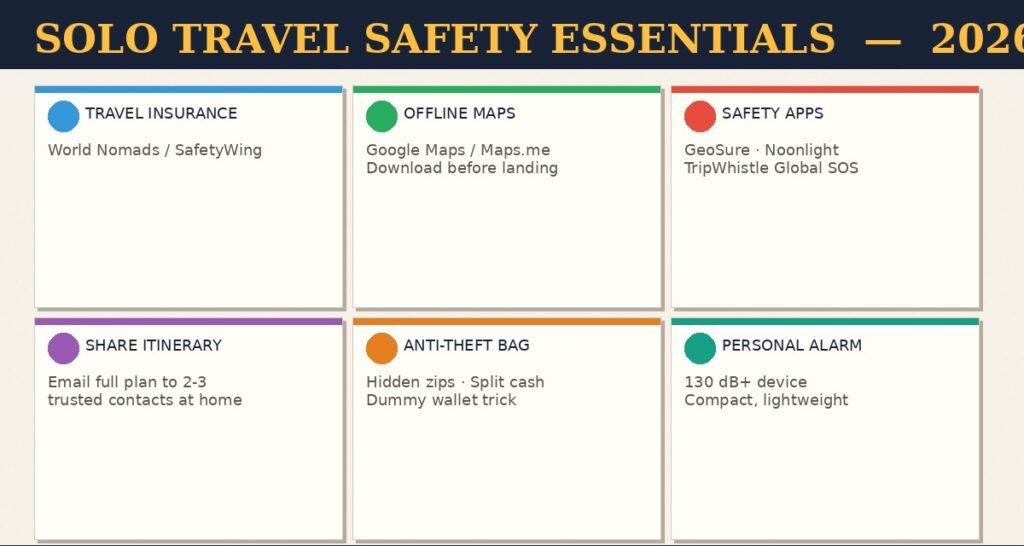
Share your itinerary with someone you trust. This is the single most underrated safety step. Email your full travel plan to at least one person at home, including flight details, accommodation names and addresses, and any planned day trips. Update them when plans change. It takes ten minutes and it matters.
Get travel insurance. This is non-negotiable. Medical care abroad can be expensive, and an emergency evacuation can cost tens of thousands of dollars. Look for a policy that covers medical emergencies, trip cancellation, and lost baggage. World Nomads is a popular option for adventure travelers because it covers a wider range of activities than most standard policies.
Save offline maps. Download your destination’s maps on Google Maps or Maps.me before you leave the airport. The last thing you want on your first night in a new city is to be standing on a street corner, visibly lost, with no data connection.
Step 1: Set Up Your Safety Toolkit
Once your trip is booked, build a small digital safety toolkit. The apps and tools below are lightweight, mostly free, and used regularly by experienced solo travelers.
TripWhistle Global SOS gives you single-tap access to local emergency numbers in 196 countries. The emergency number you need is not always 112. Download this before you go, not after you need it.
GeoSure provides real-time safety scores by neighborhood. Instead of relying on a general sense of whether a city is safe, you can check the actual safety rating of the specific area you are in or about to visit. It breaks scores down by category, including night safety, women’s safety, and LGBTQ+ safety.
WhatsApp is the most universal tool for sharing your live location with someone at home. Use the “Share Live Location” feature whenever you are moving between cities or arriving somewhere new, especially for the first 24 hours in an unfamiliar place.
Noonlight functions as a panic button that connects you to emergency services and shares your GPS location. It runs quietly in the background and requires a single tap in an emergency.
A 130dB personal safety alarm is also worth packing. They are small, inexpensive, and effective at attracting attention in situations where you feel unsafe.
Step 2: Stay Safe on the Ground
Preparation gets you far, but street awareness keeps you safe day to day. These habits are what experienced solo travelers internalize until they become second nature.
Trust your instincts before anything else. If a person, street, or situation feels wrong, leave. You do not owe anyone an explanation, and being polite in an uncomfortable situation is never worth the risk.
Do not announce that you are traveling alone. If a stranger asks, say you are meeting friends or that your travel companion is back at the hotel. This applies in taxis, at hostels, and in casual conversation with people you have just met. It is a small habit that removes a specific category of risk.
Use trusted transportation. Book licensed taxis or use apps like Uber or Grab rather than accepting rides from strangers. Sit in the back seat. Share your ride details with someone before you get in. In many destinations, local apps are safer and better value than the international options.
Know your accommodation area before you arrive. Look at your hotel or hostel on a map and note the nearest pharmacy, ATM, metro station, and hospital. Walking into a neighborhood for the first time with a clear mental map of it is a very different experience from arriving without one.
Keep your valuables split across different places. Never put all your cash, cards, and documents in one bag or one pocket. An anti-theft bag with hidden zips is a worthwhile investment for crowded areas. A dummy wallet with a small amount of cash is a classic approach that still works.
Step 3: Handle Common Problems Without Panicking
Things go wrong on every trip. The difference between a disaster and a story you laugh at later is usually preparation and a calm response.
Lost or stolen passport: Know the location of your home country’s nearest embassy or consulate before you travel. Keep a photo of your passport in your email and on cloud storage. Replacing a passport abroad is manageable but takes time, and having the details ready makes the process much faster.
Medical emergencies: Download the American Red Cross First Aid app before you go. Know how to describe your symptoms in the local language, at least at a basic level. Contact your travel insurer immediately in any serious situation, as they can direct you to the nearest appropriate hospital and handle billing directly.
Scams targeting tourists: Research the most common tourist scams at your specific destination before you arrive. Most follow recognizable patterns: a friendly stranger who leads you to a shop, a “found” item that you are then asked to pay for, or a taxi driver who claims the meter is broken. Knowing the patterns makes them easy to spot.
Solo Travel Safety by Destination Type
The safety approach that works in Tokyo is different from what you need in a rural destination or a city with higher petty crime. Here is a quick framework:
| Destination Type | Safety Priority | Key Tool |
|---|---|---|
| Major city, high infrastructure (Japan, Portugal, Singapore) | Low risk, standard awareness | Offline maps, local transport apps |
| City with petty crime (Barcelona, Rome, Bangkok) | Pickpocket prevention | Anti-theft bag, split cash and cards |
| Remote or rural destination | Emergency access | Offline SOS apps, downloaded maps |
| Country with language barrier | Navigation and medical | Translation app, insurance card with local language |
| Destination flagged in travel advisory | Risk assessment before travel | Government advisory, trip insurance upgrade |
Our Recommendation
Solo travel in 2026 is safe, manageable, and genuinely one of the best things you can do for yourself. The travelers who run into trouble are almost always the ones who skipped the preparation steps, trusted the wrong people too quickly, or ignored their instincts because they did not want to seem rude.
Get your insurance sorted, share your itinerary, download the apps, and then let yourself enjoy the trip. The world is mostly full of kind, curious people who are glad you showed up.
Frequently Asked Questions
Is solo travel actually safe for first-time travelers in 2026?
Yes, for the vast majority of destinations. Solo travel carries the same everyday risks as any travel, and most incidents involving solo travelers come down to avoidable situations such as using unlicensed transport, not securing valuables, or ignoring local advice. Solid preparation and basic street awareness are enough for most popular destinations.
What is the most important thing to do before a solo trip?
Share your full itinerary with at least one trusted contact at home and get travel insurance that covers medical emergencies. These two steps cover the most serious scenarios and require less than an hour to sort out before you leave.
Which destinations are best for first-time solo travelers?
Japan, Portugal, Singapore, Iceland, and New Zealand consistently rank as the safest and most first-timer-friendly solo destinations. They offer low crime rates, good English proficiency, reliable public transport, and established tourism infrastructure. Portugal in particular offers exceptional value at around $50 to $70 per day.
How do I stay safe as a solo female traveler?
The core safety principles apply to everyone, but a few additional habits help. Research women’s safety scores for your specific destination using the GeoSure app. Dress to blend in with local norms rather than standing out as a tourist. Avoid walking alone in unlit areas at night, and trust your instincts in social situations without feeling obligated to be polite. The FCDO’s travel guidance includes women-specific safety notes for many destinations.
Do I need travel insurance for solo travel?
Yes. Medical care abroad can cost thousands of dollars, and a serious incident without insurance can result in bills that take years to recover from. Look for a policy that covers medical emergencies, emergency evacuation, trip cancellation, and lost documents. For adventurous activities like hiking or diving, check that your policy explicitly covers them, as standard travel insurance often excludes high-risk activities.
Related Posts
- How to Plan a Multi-Gen Family Trip Everyone Will Love
- Budget Travel Europe 2026: How to Spend Under $50 a Day
- Workation Guide 2026: Best Cities in the World for Remote Workers
Author: Written by the Lexica Routes editorial team, covering travel, education, and study abroad since 2025.