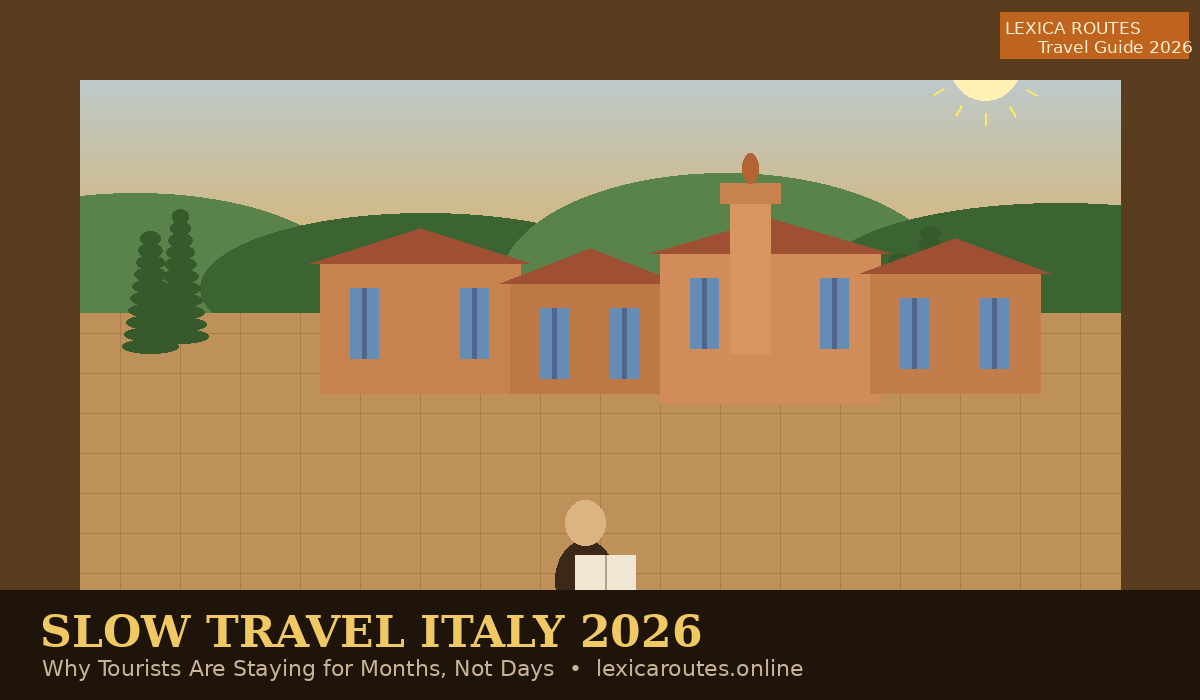
The old way of seeing Italy went like this: Rome on day one, Florence on day two, Venice on day three, and a blurry train window in between. In 2026, that approach is losing ground fast. Search interest in slow travel Italy 2026 has doubled in a single month, according to Google trends data, and the shift is not a fleeting mood. It reflects a broader rethink of what travel is actually for. More tourists are choosing depth over distance, spending weeks or even months in one region, getting to know a butcher by name, learning which bar makes the best morning cornetto, and feeling the rhythm of Italian life rather than rushing past it. This guide explains exactly why the movement is surging, which regions work best for longer stays, and how to plan your own extended Italian chapter.
Why Slow Travel Italy Is at an All-Time High in 2026
Two forces are converging to drive the shift. The first is burnout from the “revenge travel” era of 2022 and 2023, when tourists crammed maximum destinations into minimum time. The second is the mainstreaming of remote work, which has quietly untethered millions of people from fixed offices. According to industry data, the number of Americans identifying as digital nomads or “slowmads” reached approximately 18.1 million in 2025, large enough to constitute a demographic rather than a trend.
Italy sits at the natural center of this movement. The country is widely considered the birthplace of slow travel, and its cultural touchstones, from la dolce vita to the evening passeggiata, are practically the philosophy made physical. The country’s rail network makes unhurried, car-free movement easy between regions, and the agriturismo network of working farm stays connects visitors directly to rural life in ways that no hotel chain can replicate.
There is also a practical financial case. Tourists who stay put spend less on transit and tourist-strip restaurants. Many agriturismi and monthly apartment rentals offer significant discounts compared to nightly rates, and taking regional trains instead of short-haul flights meaningfully cuts the carbon cost of a trip.
How to Plan a Slow Travel Italy Trip: Step by Step
Step 1: Choose one base region, not a highlight reel
The single most important decision is where to anchor yourself. Picking one region for two to four weeks delivers far more than a city-hopping circuit. Here are the four regions that work best for extended stays in 2026.
Tuscany remains the most established slow travel base, with Lucca, Siena, and the Chianti countryside all suited to weeks-long stays. The region’s density of agriturismi, excellent rail and bus links, and food culture built around seasonal, local produce make it easy to fill weeks without rushing. Florence and Pisa are reachable as day trips without ever needing to leave your slower base.
Puglia, in Italy’s heel, has recorded a 28% annual increase in bookings among travelers seeking less-visited corners of the country. Towns like Lecce, Ostuni, and Alberobello reward the kind of familiarity that only longer stays provide. The Adriatic coastline, olive groves, and trulli architecture make it visually distinct from the more-traveled north.
South Tyrol (Alto Adige) in the northern Alps has emerged as a 2026 favourite for slow travelers wanting nature-first experiences. Towns like Merano, Brixen, and Castelrotto serve as ideal base camps for multi-week stays. The region combines small Alpine towns, extensive trail networks, and a food culture shaped by both Italian and Austrian traditions.
Umbria, often described as Tuscany without the tourists, offers medieval hilltop towns, organic food culture, and genuine quiet. Orvieto, Spoleto, and Assisi are all manageable bases for a month-long stay.
Step 2: Secure long-stay accommodation before you arrive
Monthly rentals on platforms like Airbnb, Booking.com, and local Italian agencies typically unlock discounts of 30 to 50 percent over nightly rates. A well-located apartment in Lucca, Lecce, or Merano runs roughly €800 to €1,500 per month depending on size and season, and that price includes kitchen access, which dramatically reduces daily food spending. Agriturismi often negotiate weekly or monthly rates directly and provide access to farm produce and a community that short-stay guests never encounter.
Book early. Long-stay inventory is tighter than it appears online, and the best properties in smaller towns fill via word of mouth before they ever appear on booking platforms.
Step 3: Structure your days loosely, not tightly
The error most first-time slow travelers make is importing their old pace into a new container. One main activity per day is plenty. A market in the morning, a long lunch prepared from what you bought, an afternoon walk through a neighborhood you have not visited yet. Leave at least two days per week completely unplanned so that local recommendations can actually be followed.
Italy’s regional train network is both affordable and practical for day trips. A second-class ticket from Lucca to Florence costs under €6 and takes 90 minutes. Slow travel does not mean staying inside four walls; it means letting the journey be part of the experience rather than something to endure.
Step 4: Learn at least basic Italian before you go
This is the step most travelers skip and most regret. In smaller Italian towns and at the Questura (if you are applying for a residence permit), interactions are primarily in Italian. Even a working vocabulary of 200 words shifts the quality of your daily experience substantially. You stop being a tourist and start being a visitor, which, as longtime slowmads will tell you, is a genuinely different thing.
Visa Options for Extended Stays in Italy in 2026
For trips beyond the standard 90-day Schengen allowance, Italy now offers two practical legal routes.
The Italy Digital Nomad Visa launched fully in early 2026 and allows non-EU citizens who work remotely for employers or clients outside Italy to live in the country for up to one year, with annual renewals available. The minimum annual income requirement is approximately €28,000 gross (around €2,333 per month). Applications are submitted at the Italian consulate in your country of residence, and a residence permit must be applied for within eight days of arrival in Italy. Processing typically takes 30 to 90 days, so plan well in advance. Full requirements and the official application process are available at the Italian Ministry of Foreign Affairs.
The Italy Elective Residency Visa suits those with passive income, such as rental income, dividends, or pensions. It requires demonstrating a minimum passive income of approximately €31,000 per year and does not permit any form of employment, including remote work. It is the preferred route for retirees and financially independent travelers planning a long-term Italian life.
For EU citizens and those within the 90-day Schengen window, no visa is required. Staying in a single region for most of that window is entirely legal and increasingly common. You can read an independent overview of Italy’s nomad and residency pathways at Citizen Remote’s Italy visa guide, and find regularly updated travel trend data at Tourist Italy.
Pros and Cons of Slow Travel in Italy
| Pros | Cons | |
|---|---|---|
| Cost | Monthly rentals cost far less per day than hotels | Higher upfront outlay for deposit and first month |
| Experience | Genuine local connections and neighborhood familiarity | Takes one to two weeks to fully settle in |
| Pace | Less exhaustion and stronger travel memories | Requires releasing the must-see checklist mindset |
| Practical | Cooking at home cuts food costs significantly | Good monthly rentals require early booking |
| Visa (90+ days) | Digital Nomad Visa now fully live and accessible | Requires minimum income proof and advance application |
Bottom line
Slow travel Italy 2026 is not a niche lifestyle choice for a particular type of traveler. It is a practical reframe of what a trip can be. You trade a checklist for a rhythm, a suitcase for a kitchen shelf with local olive oil and wine, and a tourist identity for something closer to a temporary resident. The regions that work best, including Tuscany, Puglia, Umbria, and South Tyrol, all reward time in ways that a three-day visit simply cannot access. If you have remote work flexibility or are within your Schengen allowance, the barrier to entry is lower than it has ever been. For longer stays, Italy’s Digital Nomad Visa removes the last logistical obstacle.
Frequently asked questions
Is slow travel in Italy actually cheaper than a standard vacation?
Yes, in most cases. Monthly apartment rentals in regions like Tuscany, Puglia, and Umbria typically cost between €800 and €1,500 per month, which is significantly cheaper per night than hotel rates. Cooking from local markets and avoiding tourist-area restaurants reduces daily spend further, meaning a 30-day slow travel trip can cost less in total than a 10-day whirlwind tour.
How long do I need to stay in one place for it to count as slow travel?
Most experienced slow travelers consider a minimum of seven to ten days in a single location the threshold. Anything shorter and you do not have time to establish routines or local familiarity. Two to four weeks is the sweet spot for most regions. Some travelers, particularly digital nomads on Italy’s new visa, stay two to three months per base.
Do I need a special visa to slow travel in Italy for more than 90 days?
Yes. EU citizens can stay indefinitely under freedom of movement rules. Non-EU travelers are limited to 90 days within any 180-day period under standard Schengen rules. For longer stays, Italy’s Digital Nomad Visa (for remote workers earning at least €28,000 annually) or the Elective Residency Visa (for those with sufficient passive income) are the two primary legal routes available in 2026.
What are the best regions in Italy for a first slow travel experience?
Tuscany remains the easiest starting point due to its infrastructure, agriturismo network, and density of options. Puglia is the strongest choice for travelers wanting fewer tourist crowds and a more distinct regional culture. Umbria suits those looking for medieval hill towns and genuine quiet. South Tyrol works well for anyone prioritizing nature, outdoor activities, and Alpine scenery alongside Italian culture.
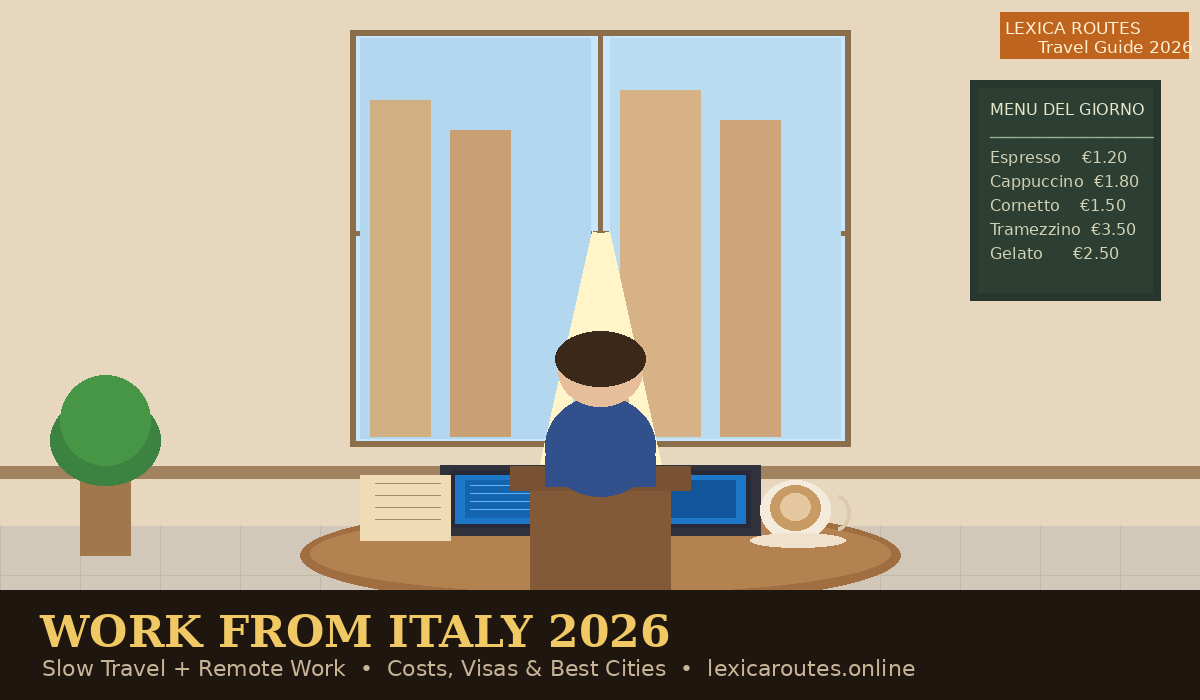
Can I work remotely while slow traveling in Italy?
Yes, legally, if you hold Italy’s Digital Nomad Visa or are a citizen of an EU country. Non-EU travelers staying under the 90-day Schengen allowance are technically not permitted to work in Italy. For longer stays, the Digital Nomad Visa explicitly permits remote work for employers or clients based outside Italy, and it has been fully operational since early 2026.