Summer in Europe sounds perfect until you’re waiting 90 minutes for a gondola in Venice or paying €25 for a mediocre pizza near the Colosseum. The most iconic spots on the continent fill up fast, and in 2026, they are fuller than ever. The good news is that Europe is enormous, wildly varied, and most of it is gloriously overlooked between June and September. If you are hunting for off-peak Europe travel in 2026, you are in the right place. This list covers 10 destinations that deliver the warmth, culture, food, and scenery you came for, without the queues, the inflated prices, or the performance of tourism. These are real places that reward travelers who show up with a little curiosity and no Instagram itinerary.
Why Off-Peak Europe Actually Beats Peak Europe in 2026
Before we get into the list, it is worth understanding what is driving this shift. According to the European Travel Commission, 55% of Europeans now plan to spend their summer holidays in less popular or off-the-beaten-track locations, up from 48% last year. Concerns about overtourism, climate fatigue, and rising costs at marquee destinations are pushing smart travelers toward quieter corners of the continent.
Off-peak does not always mean off-season. In many cases, it simply means choosing a destination that sits a step or two outside the standard tourist circuit. You still get summer weather, open restaurants, and full cultural calendars. What you lose is the crowd taxing the premium you pay in time, money, and patience at Europe’s most photographed spots.
Here are the 10 best off-peak travel destinations in Europe for summer 2026.
1. Porto, Portugal
Porto is not exactly a secret anymore, but it runs at a fraction of the intensity of Lisbon. In June and September, the city hits its sweet spot: temperatures hover around 22 to 24°C, the Douro Valley is lush, and you can actually get a table at a tasca in Ribeira without a reservation. A lunch of grilled sardines and vinho verde runs €12 to €15 and the port wine lodges in Vila Nova de Gaia are genuinely walkable from the famous Dom Luís I Bridge. August sees northern European visitors pack in, so late June and early September are the real windows here.
Best for: Food lovers, wine tourism, city walkers. Budget tip: Staying in the Bonfim or Campanhã neighborhoods cuts accommodation costs by 30 to 40% versus the historic center.
2. Plovdiv, Bulgaria
Plovdiv became Europe’s Capital of Culture in 2019 and then, inexplicably, never really ended up on everyone’s must-visit list. That oversight is your advantage. Bulgaria’s second city has a beautifully preserved old town, a Roman amphitheater that still hosts live performances, and a creative neighborhood called Kapana packed with independent galleries, coffee shops, and wine bars. Prices are among the lowest in the EU, summers are warm and dry, and flights from major European hubs are affordable. It is a genuine hidden gem that feels lived-in rather than staged.
Best for: History fans, art and culture travelers, budget backpackers. Budget tip: A full dinner for two at a traditional mehana (tavern) rarely exceeds €15 to €18.\
3. Slovenia (Ljubljana and Beyond)
Slovenia has been quietly building a reputation as one of Europe’s most exciting small destinations. Ljubljana, the compact capital, has a castle, a riverside cafe culture, and almost zero tourist fatigue. But the real draw is beyond the city: Lake Bled is stunning (and yes, somewhat famous), but Lake Bohinj just next door is quieter, larger, and equally beautiful. The Julian Alps offer serious hiking in summer without the gear-hauling crowds of the Swiss or Austrian Alps. Slovenia’s commitment to sustainable, small-scale tourism also means experiences here feel genuinely authentic.
Best for: Outdoor adventurers, couples, nature lovers. Budget tip: Ljubljana’s central market is perfect for a cheap, delicious lunch of local cheeses, bread, and Slovenian wines.
4. Kotor, Montenegro
Montenegro’s walled old city of Kotor sits at the edge of a dramatic fjord-like bay and is on the UNESCO World Heritage list. It has some summer visitors, but nothing close to nearby Dubrovnik, which can feel genuinely overwhelming in July and August. Kotor keeps its charm intact through the summer months. The surrounding Bay of Kotor offers beaches, boat trips, and a string of small villages worth exploring by bike or water taxi. Montenegro has also become increasingly popular with budget travelers who are priced out of the Croatian coast.
Best for: History lovers, coastal travelers, those who would have gone to Dubrovnik. Budget tip: Accommodation in Kotor’s outer neighborhoods runs 40 to 50% cheaper than inside the walls.
5. Valletta, Malta
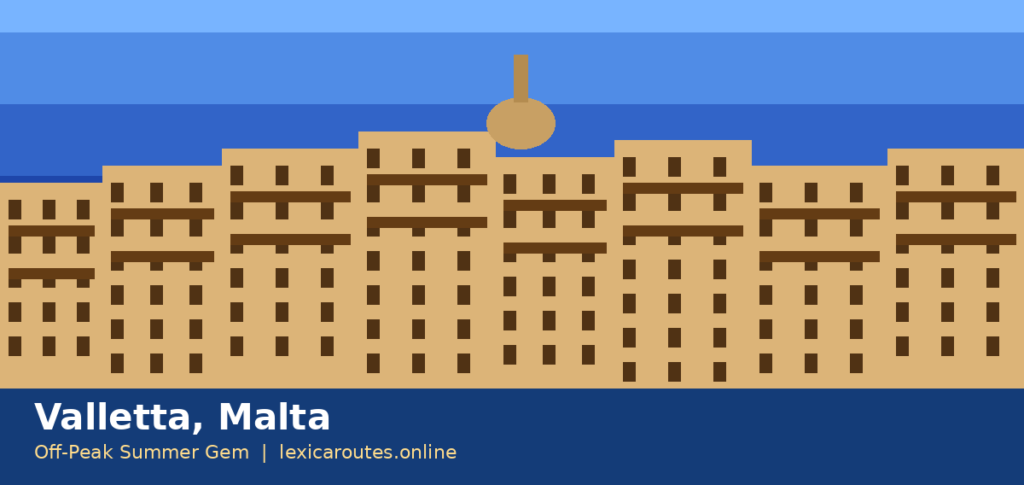
Malta as a whole is underselling itself. Valletta, the small but punchy capital and a UNESCO World Heritage city, is one of Europe’s most concentrated hits of baroque architecture, sea views, and history per square mile. It is warm from May through October, English is widely spoken, and the island’s accessibility from most European airports makes it an easy long weekend or week. Summer crowds exist but they are nothing compared to mainland Mediterranean hotspots. The food scene has improved dramatically in recent years, with local restaurants leaning hard into Maltese-Mediterranean fusion.
Best for: Weekend breaks, cultural city trips, history enthusiasts. Budget tip: Valletta’s local bus network is comprehensive and costs €1.50 per trip. Hire a car only if you want to explore Gozo.
6. The Azores, Portugal
If you want to feel like you discovered somewhere genuinely wild, the Azores is the answer. This Portuguese archipelago in the middle of the Atlantic is as close to Iceland as it is to mainland Europe, and it delivers volcanic landscapes, thermal pools, whale watching, and ocean swimming in one improbable package. Flights from Lisbon are short and cheap. The island of São Miguel is the easiest entry point, with the stunning Sete Cidades crater lakes, geothermal hot springs at Furnas, and green hills that look more like New Zealand than Southern Europe. Tourism here is growing but still nowhere near saturation.
Best for: Nature lovers, adventure travelers, photography. Budget tip: Accommodation on São Miguel ranges from €50 to €80 per night for well-rated guesthouses, well below mainland Portuguese resort prices.
7. Ghent, Belgium
Bruges gets all the attention. Ghent, just 30 minutes away by train, has the same medieval canals, Flemish architecture, and extraordinary Belgian food without the day-tripper congestion. It is also a university city, which means it has a much better bar and restaurant scene, a genuine local population going about their lives, and a calendar full of cultural events in summer. The Ghent Festivities in late July transform the city into one enormous open-air party and are worth building a trip around.
Best for: City breakers, food and beer lovers, those who loved Bruges but wanted more soul. Budget tip: Belgian fries from a frituur cost €3 to €4 and are legitimately among the best snacks in Europe.
8. Faroe Islands, Denmark
The Faroe Islands are having a moment in 2026, but that moment is still measured in thousands of visitors, not millions. If you want dramatic scenery, grass-roofed houses on clifftops, waterfalls pouring directly into the sea, puffins on sea stacks, this is Europe’s most cinematic destination right now. Summer (June to August) is the only real window for comfortable visits, with temperatures around 12 to 15°C and long daylight hours. It requires planning and is not budget travel, but the payoff in raw, crowd-free landscape is unmatched.
Best for: Photography, outdoor adventure, escape from crowds. Budget tip: Self-catering is the most realistic way to manage costs. Local supermarkets are well-stocked and affordable relative to restaurants.
9. Alta Badia, Italy (South Tyrol)
Most people going to the Dolomites head to Cortina d’Ampezzo or Bolzano. Alta Badia, tucked into the South Tyrol region, delivers the same UNESCO-listed peaks, mountain meadows, and hiking trails with significantly fewer visitors. It is also one of Italy’s most unusual food destinations: the area has a disproportionate concentration of Michelin-starred restaurants for its size, but even simple mountain huts (called refuges) serve exceptional local cooking. Think mountain cheeses, handmade pasta, and comfort-food strudels at altitudes where you’ve earned every calorie.
Best for: Hikers, foodies, families Budget tip: A day hike using the valley’s cable car network is far cheaper than guided tours and covers equally spectacular terrain.
10. Plovdiv to Thessaloniki, Greece (The Balkan Diagonal)
This is less a single destination and more a routing suggestion. Instead of flying into Athens and joining the Santorini circuit, consider a Balkans-first approach: fly into Sofia or Plovdiv, travel south through Bulgaria and North Macedonia, and cross into Thessaloniki for your Greek fix. Thessaloniki is Greece’s second city and one of its most underrated, with a better food scene than Athens (many Greeks will tell you this), a Byzantine heritage that runs circles around the tourist narrative, and a waterfront promenade that is genuinely lovely on a summer evening. The whole route is achievable by bus and train on a tight budget.
Best for: Backpackers, independent travelers, those who want Greece without the premium Budget tip: Thessaloniki’s food market (Modiano Market) is the best place to eat and drink for very little money.
COMPARISON TABLE
| Destination | Best For | Avg. Daily Budget | Crowd Level (Summer) |
|---|---|---|---|
| Porto, Portugal | Food and wine | €80–€100 | Moderate |
| Plovdiv, Bulgaria | Culture, budget | €40–€60 | Low |
| Ljubljana, Slovenia | Nature, city breaks | €70–€90 | Low–Moderate |
| Kotor, Montenegro | Coast, history | €60–€80 | Moderate |
| Valletta, Malta | City breaks | €80–€100 | Moderate |
| The Azores, Portugal | Nature, adventure | €90–€120 | Low |
| Ghent, Belgium | City breaks, food | €80–€100 | Low–Moderate |
| Faroe Islands | Photography, nature | €150–€200 | Very Low |
| Alta Badia, Italy | Hiking, food | €100–€150 | Low–Moderate |
| Thessaloniki, Greece | Food, culture | €60–€80 | Low |
Our take
Off-peak Europe travel in 2026 is not a compromise. It is a smarter way to travel. The destinations on this list offer everything that draws people to Europe in summer warmth, culture, history, food, and coastline, without the parts that make headlines for the wrong reasons. Plovdiv and Kotor are the strongest value picks for budget-conscious travelers. Porto and the Azores are the best all-round choices for first-time visitors to Portugal. The Faroe Islands and Alta Badia are the ones to bookmark if you are chasing a genuinely memorable experience over convenience.
If you are still figuring out where in Europe to base yourself, read our full guide to the best cheap cities in Europe for budget travelers, where we break down cost of living, transport, and accommodation in detail.
FREQUENTLY ASKED QUESTIONS
Which off-peak European destination is the best overall for summer 2026?
Porto consistently sits at the top of most off-peak European destination lists for good reason. It combines genuine culture, world-class food and wine, walkable neighborhoods, and reasonable prices. June and September give you the best weather without the August crowds. It also has excellent flight connections from across Europe, making it easy to reach without a premium airfare.
What are the cheapest off-peak European countries to visit in summer 2026?
Bulgaria, North Macedonia, Montenegro, and Albania offer the lowest daily costs in Europe for summer travel in 2026. A comfortable day in Plovdiv, Bulgaria, including accommodation, meals, and activities, can come in under €50. These destinations are not rough or underdeveloped, they simply have not been priced up by mass tourism yet.
Is the Faroe Islands worth it for summer travel if it is expensive?
If dramatic, crowd-free landscapes are your primary goal and budget is not a strict constraint, the Faroe Islands are absolutely worth the cost. Summer (June to August) is the only reliable window for a visit. The cost is driven mainly by accommodation and restaurants, self-catering and careful booking can bring a week-long trip in at €1,500 to €2,000 per person including flights, which compares favorably to many peak-season Mediterranean holidays.
How do I avoid tourist crowds in Europe during peak summer?
Timing and routing are the two biggest levers. Traveling in June before schools break up or in September after they return immediately reduces crowds at most European destinations. Choosing secondary cities over primary ones, Ghent over Bruges, Thessaloniki over Athens, Kotor over Dubrovnik delivers a comparable experience without the congestion. Staying longer in fewer places also helps you move at a local pace rather than a tourist one.
Is off-peak summer travel in Europe actually cheaper than peak travel?
In most cases, yes. Accommodation is the biggest saving: prices at hotels and apartments in secondary destinations can run 30 to 50% lower than at equivalent properties in Barcelona or Venice during July and August. Flight prices vary, but routes to less-traveled airports (Sofia, Valletta, Ponta Delgada) tend to be cheaper than hub routes. The bigger saving is often in quality of experience: shorter queues, available tables, and a slower pace cost nothing.
Explore our more pages: Education | EdTravel | Travel |