If you or your kid are heading into the 2026-27 college year, the financial aid landscape just changed under your feet. Signed on July 4, 2025, the One Big Beautiful Bill education act is already reshaping how families borrow for college, how Pell Grants work, and what your repayment options look like. Most changes hit on July 1, 2026, and if you haven’t mapped out how they apply to your situation, now is the time. Here’s what’s actually changing and what it means for real students right now.
What Actually Changed on July 1, 2026
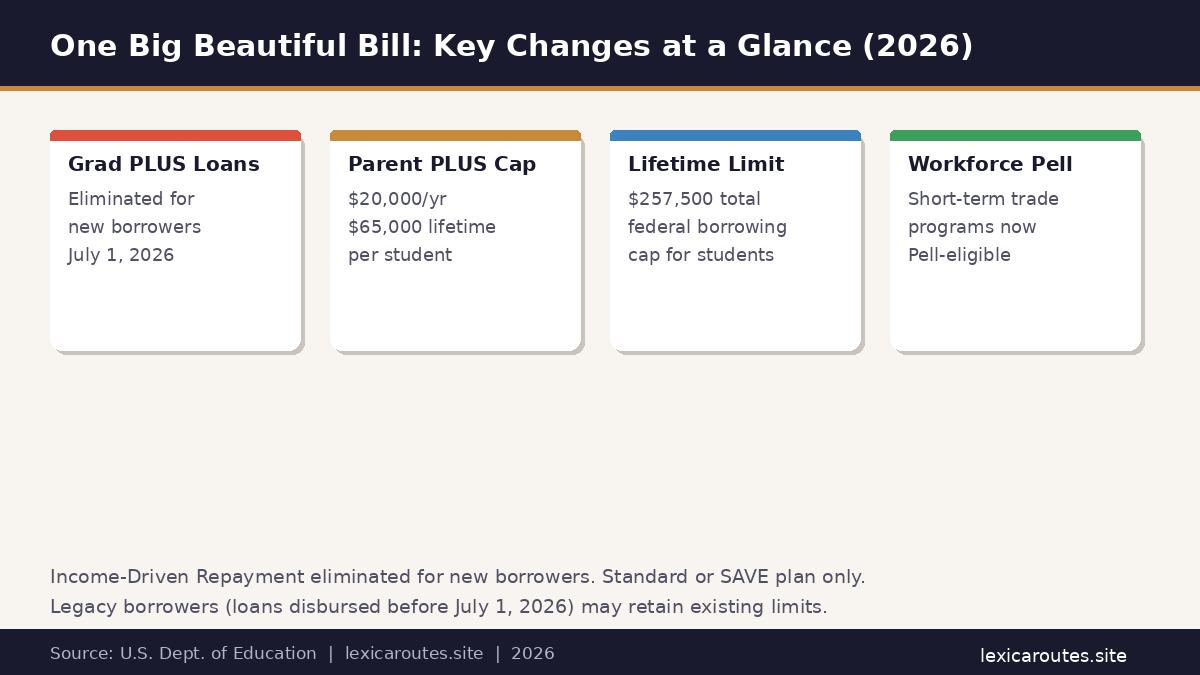
The headline shift is simple: you can no longer borrow unlimited amounts through federal programs. The Grad PLUS Loan is gone for new borrowers, full stop. Graduate students now face an annual limit of $20,500 and a lifetime cap. Professional students have a $50,000 annual limit and a $200,000 aggregate ceiling. That is a significant cut for anyone in law school or medical school who was counting on Grad PLUS to cover the gap.
Parent PLUS Loans got a hard cap too. According to the National Association of Independent Colleges and Universities, parents can now borrow no more than $20,000 per year per child, with a $65,000 lifetime limit. Before July 2026, parents could borrow up to the full cost of attendance, which for expensive private schools could run $80,000 a year. That era is over.
There is also a new lifetime borrowing cap of $257,500 across all federal student loans. Families considering high-cost schools need to run the numbers now, not after enrollment.
The Workforce Pell Grant: One Real Bright Spot
Not everything in this legislation shrinks access. Starting July 1, 2026, Pell Grants can be used for short-term workforce training programs, including electrician certification, healthcare aide training, and tech credentialing courses. These “Workforce Pell” grants are worth up to $7,395 and cover programs typically running 8 to 15 weeks at accredited community colleges and trade schools. According to CNBC’s higher education coverage, experts expect this to fuel a major rise in shorter, career-focused credentials over traditional four-year degrees. For students who want faster ROI on their education, this is actually useful news.
Repayment Rules That Will Sting New Borrowers
Income-Driven Repayment plans, including popular options like IBR and ICR, are being eliminated for new borrowers taking out loans after July 2026. If you are borrowing fresh, you will choose between a Standard Repayment Plan or SAVE. This is a major shift for anyone hoping for flexible monthly payments tied to their income, especially during lean post-grad years.
Starting July 2027, economic hardship deferments and unemployment forbearance are also being phased out for new loans. As CBS News reported, borrowers need to budget more carefully upfront rather than assuming the safety nets of the past decade will still be there.
KEY FACTS BOX
| What | Detail |
|---|---|
| What happened | One Big Beautiful Bill signed July 4, 2025; effective July 1, 2026 |
| Who is affected | New federal student loan borrowers from July 1, 2026 onward |
| Grad PLUS Loans | Eliminated for new borrowers; $20,500 annual / $100,000 aggregate unsubsidized cap |
| Parent PLUS Loans | Capped at $20,000/year and $65,000 lifetime per student |
| Lifetime loan cap | $257,500 total federal borrowing limit |
| Workforce Pell | Short-term trade and vocational programs now Pell Grant eligible |
| Repayment changes | IDR plans eliminated for new borrowers; Standard or SAVE only |
| Legacy provision | Students with loans disbursed before July 1, 2026 may retain current limits |
VERDICT
The One Big Beautiful Bill education changes are real, and the impact lands unevenly. Graduate and professional students at high-cost programs will feel the squeeze hardest, especially those who depended on Grad PLUS to cover full tuition. Families with undergraduate students at expensive private schools face a tighter Parent PLUS ceiling than they expected. But the Workforce Pell expansion is a genuine win for students pursuing trade and vocational credentials. The honest takeaway: if you borrowed before July 2026, check your legacy status carefully. If you are borrowing fresh, map out your total degree cost against the new caps before you commit.
Frequently asked questions
What is the One Big Beautiful Bill education act?
The One Big Beautiful Bill Act is a federal budget law signed by President Trump on July 4, 2025. It overhauls federal student aid rules, capping loan amounts, eliminating the Grad PLUS loan program for new borrowers, and expanding Pell Grants to short-term vocational and workforce training programs. Most provisions took effect July 1, 2026.
How does the One Big Beautiful Bill affect college costs for graduate students?
Graduate students borrowing after July 1, 2026 face a $20,500 annual unsubsidized loan limit and a $100,000 aggregate cap, with a total lifetime federal borrowing limit of $257,500. The Grad PLUS loan program, which previously allowed unlimited borrowing up to cost of attendance, is eliminated for new borrowers.
What are the new Parent PLUS loan limits in 2026 under the One Big Beautiful Bill?
Parents can now borrow a maximum of $20,000 per year per child and $65,000 over the lifetime of a student’s education. Previously, Parent PLUS loans allowed borrowing up to the full cost of attendance with no aggregate cap, making this a significant reduction for families at high-cost institutions.
Can Pell Grants now be used for trade school or workforce training programs?
Yes. Starting July 1, 2026, the Workforce Pell Grant allows low-income students to use Pell funding for accredited short-term programs in areas like healthcare, technology, and skilled trades. These programs typically run 8 to 15 weeks and must be offered at federally eligible institutions such as community colleges and trade schools.
Are students who already have federal loans protected from these changes?
Students who had federal student loans disbursed before July 1, 2026 may qualify for legacy provisions that let them continue borrowing under previous limits for up to three years, or until they complete their current program. However, switching schools, changing majors, or lapsing in enrollment can terminate legacy status. Check directly with your school’s financial aid office.
RELATED POSTS
You might also like:
Author: Written by the Lexica Routes editorial team, covering travel, education, and study abroad since 2025.



1 comment