If you have ever wanted to study, freelance, and explore the world at the same time, the digital nomad student visa in 2026 might be your most practical route yet. What once felt like a niche lifestyle reserved for tech bros and travel bloggers is now a legitimate, legally recognised way to live and work abroad, and a growing number of countries are actively rolling out the welcome mat for remote workers, including students.
As of 2026, over 60 countries offer some form of digital nomad visa or remote work permit, each with its own income threshold, visa length, and tax treatment. For students who freelance, tutor online, or run small digital businesses, these programs open doors that traditional student visas simply do not. This guide covers the best countries for a digital nomad student visa in 2026, with the numbers and practical details you actually need.
What Is a Digital Nomad Visa and Can Students Use It?
A digital nomad visa is a residence permit that lets you live legally in a foreign country while earning income from outside it. Unlike a traditional work visa, it does not require a local employer to sponsor you. You could be a freelance writer, an online tutor, a graphic designer, or even a student running a small Etsy shop or selling digital products.
According to VisaHQ, most programs require a minimum monthly income, proof of remote work or self-employment, and valid health insurance. The income thresholds vary wildly, from around $750 per month in Colombia to over $3,500 in some European countries. The key point for students is this: if you can demonstrate consistent remote income and meet the financial requirements, most of these visas are within reach, even if you are still enrolled in a degree programme.
Spain is one country that makes this explicit. Its digital nomad visa, introduced under the Startup Act, allows holders to engage in educational activities alongside remote work, making it particularly attractive for students who want to continue learning while living and working in Europe.
7 Best Countries for a Digital Nomad Student Visa in 2026
Here are the top destinations worth seriously considering, ranked for a combination of affordability, visa accessibility, and student-friendliness.
1. Portugal
Portugal’s D8 Digital Nomad Visa has become one of the most sought-after remote work permits in Europe. The minimum income requirement sits at approximately €3,480 per month, with a visa valid for one year and a clear pathway to extend. The Non-Habitual Resident (NHR) tax regime can offer significant tax advantages for qualifying applicants. Students who are freelancing or running online businesses benefit from Lisbon and Porto’s thriving co-working culture and one of Europe’s most affordable capitals. According to Global Citizen Solutions, Portugal also offers a clear citizenship pathway for those who plan to stay long-term.
2. Spain
Spain’s digital nomad visa stands out because it explicitly allows holders to participate in educational activities, making it the only top-tier European option that formally accommodates the student-nomad lifestyle. The minimum income requirement is around $3,105 per month, and the visa is valid for one year with extensions available. Cities like Valencia and Malaga are rapidly growing as remote work hubs, with lower living costs than Barcelona or Madrid. The Beckham Law tax regime can further reduce the tax burden for qualifying international applicants.
3. Croatia
Croatia offers one of the most financially attractive options in Europe for remote workers. Foreign-source income is currently exempt from local income tax, which is a significant advantage for students earning from clients or employers outside Croatia. The income requirement is roughly $3,000 per month, and the visa runs for up to one year. As Taxes for Expats notes, Croatia is the strongest low-tax option within the EU for non-resident digital nomad visa holders.
4. Thailand
For students looking outside Europe, Thailand’s Long-Term Resident (LTR) visa is one of the most comprehensive remote work permits in Asia. It requires a minimum monthly income of around $2,700 and grants up to five years of stay. Thailand operates a territorial tax system, meaning income earned from outside the country is generally not taxed locally. The combination of a low cost of living, fast internet infrastructure, and a massive international nomad community makes Thailand a practical base for student-nomads on tighter budgets.
5. Costa Rica
Costa Rica’s digital nomad visa is particularly student-friendly. The programme exempts holders from local income tax and allows them to open a local bank account. Visa holders can also drive on a home country licence, which is a small but genuinely useful detail. The stay period is two years, and the income requirement is approximately $3,000 per month. Students based in Costa Rica can explore Central America easily, with strong air links across the region. The country consistently ranks as a regional leader in safety and internet connectivity, according to the Passportivity Digital Nomad Visa Index 2026.
6. Estonia
Estonia’s e-Residency programme and Digital Nomad Visa make it one of the most digitally advanced and bureaucratically straightforward options in the world. The income requirement is around €3,500 per month, and the visa is valid for one year. Being in the EU means access to the Schengen Area, making it easy to travel across Europe during your stay. Estonia is especially well-suited to students in tech, design, or any field where an EU business presence matters.
7. Colombia
For students with a smaller income base, Colombia offers the lowest barrier to entry of any serious digital nomad visa programme. The minimum income requirement is approximately $750 per month, making it genuinely accessible to students at the beginning of their freelancing journey. The visa is valid for two years. Medellin in particular has developed a strong reputation as a budget-friendly digital nomad hub, with fast internet, affordable co-working spaces, and a large English-speaking expat community.
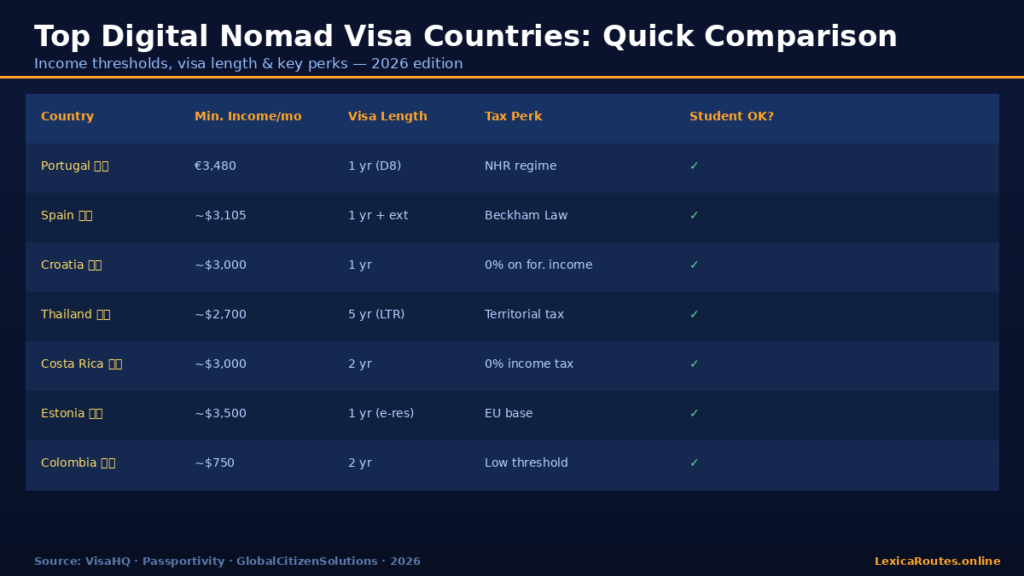
COMPARISON TABLE
| Country | Min. Income/Month | Visa Length | Key Tax Benefit | Student-Friendly |
|---|---|---|---|---|
| Portugal | ~€3,480 | 1 year (D8) | NHR tax regime | Yes |
| Spain | ~$3,105 | 1 year + ext. | Beckham Law | Yes (education allowed) |
| Croatia | ~$3,000 | 1 year | 0% on foreign income | Yes |
| Thailand | ~$2,700 | 5 years (LTR) | Territorial tax system | Yes |
| Costa Rica | ~$3,000 | 2 years | 0% local income tax | Yes |
| Estonia | ~€3,500 | 1 year | EU Schengen access | Yes |
| Colombia | ~$750 | 2 years | Low threshold | Yes |
Income thresholds are approximate for solo applicants and are subject to change. Verify current requirements directly with each country’s official immigration authority before applying.
VERDICT
The digital nomad student visa landscape in 2026 has never been more accessible. If your income can meet the threshold, countries like Colombia and Thailand offer genuinely affordable entry points, while Spain and Portugal deliver the best blend of lifestyle, legal clarity, and long-term options for students who want to combine formal study with remote work.
The single most important step is to verify current income thresholds and visa rules directly with each country’s official immigration authority before you apply, as these figures are updated regularly. Do not rely on blog posts alone, including this one, for your final application decisions.
FAQ
Can I apply for a digital nomad visa if I am still a student?
Yes, in most cases. As long as you can demonstrate consistent remote income that meets the country’s minimum threshold, your student status does not disqualify you. Spain’s visa explicitly allows educational activities for visa holders, making it the most student-friendly option in Europe. Always confirm eligibility directly with the relevant consulate.
Which digital nomad visa has the lowest income requirement in 2026?
Colombia currently offers the lowest minimum income threshold of any established digital nomad visa programme, at around $750 per month for a solo applicant. This makes it the most accessible option for students who are early in their freelancing or online business journey and not yet earning European-level rates.
Do digital nomad visa holders have to pay taxes in the host country?
It depends on the country. Croatia and Costa Rica both exempt foreign-source income from local tax, making them highly tax-efficient. Countries like Spain and Portugal do have local tax regimes that can apply after a certain threshold. The situation for US citizens is more complex because they file US taxes on worldwide income regardless of where they live. Consulting a cross-border tax specialist before you apply is always worth the cost.
How long does it take to get a digital nomad visa approved?
Processing times vary significantly. Barbados is one of the fastest, at around one week, while Portugal’s D8 visa and Italy’s remote worker permit can take up to eight weeks. Most countries fall in the two to four week range when applications are submitted correctly and documentation is complete.
Can I bring my family or partner on a digital nomad visa?
Most digital nomad visa programmes allow dependents, including spouses and children, to be added to the application. However, the minimum income threshold typically increases when you add dependents. Portugal, for example, requires an additional €3,132 per child and €5,220 per additional adult on top of the base requirement. Always check the current dependent rules for the specific country before applying.
Author: Written by the Lexica Routes editorial team, covering travel, education, and study abroad since 2025.


1 comment