If you have ever wanted to walk in Darwin’s footsteps, look through a telescope at the southern sky, or test water samples for biodiversity in the Dolomites, 2026 is the year to make it happen. Science tourism is having a genuine moment right now. More travelers are choosing trips that satisfy their curiosity, not just their wanderlust, and the industry has responded with a wave of expert-led expeditions, citizen science programs, and immersive STEM experiences designed for curious adults and students alike. This list covers the 10 best science tourism destinations in 2026 for anyone who wants to learn while they travel, whether that means watching wildlife, exploring geology, or getting hands-on with cutting-edge technology.
How We Chose These Destinations
Every destination on this list was selected against three clear criteria: scientific significance, access to meaningful hands-on experiences, and practical visitability for international travelers in 2026. We looked at destinations with active research programs, UNESCO recognition, or strong citizen science infrastructure, along with places where the science itself is the reason to go, not just a backdrop for sightseeing.
The 10 Best Science Tourism Destinations in 2026
1. Galapagos Islands, Ecuador
Few places on Earth demand the word “pilgrimage” more than the Galapagos. These islands gave Charles Darwin the raw material for evolutionary theory, and they continue to function as one of the most active living laboratories on the planet. In 2026, the Charles Darwin Foundation runs ongoing citizen science programs where visitors can contribute data on tortoise populations, marine iguana behavior, and coral bleaching. Strict visitor quotas keep the ecosystem intact, but licensed naturalist guides make every shore landing genuinely educational. This is the undisputed top pick for anyone with an interest in biology, ecology, or natural history.
2. Iceland
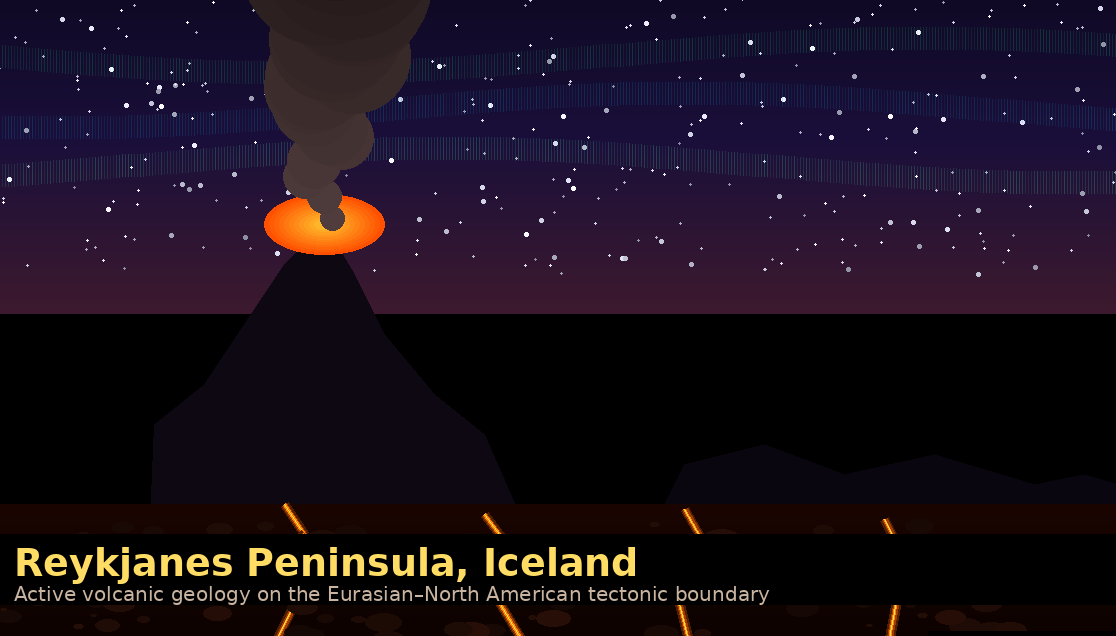
Iceland covers almost every branch of earth science in a single country: active volcanoes, mid-ocean ridge geology, geothermal fields, glaciers, and the Northern Lights. The country’s geological diversity is staggering, and guided tours led by volcanologists have become a serious niche in 2026. The Reykjanes Peninsula, sitting directly on the tectonic boundary between the Eurasian and North American plates, has seen renewed volcanic activity in recent years, making it one of the most watched geological zones on Earth. For space science, the dark skies of the Westfjords region offer some of the best aurora viewing in the northern hemisphere.
3. New Zealand
New Zealand checks nearly every science tourism box in one destination. The country is home to pristine fiords, active geothermal fields, ancient forests, and some of the Southern Hemisphere’s most spectacular dark sky reserves. The Aoraki Mackenzie International Dark Sky Reserve is among the largest certified dark sky reserves on Earth, drawing astronomers and stargazers from across the world. On the nature side, conservation-led tours focused on the recovery of threatened species like the kakapo and kiwi give travelers a window into active conservation science. Expedition cruise operators now regularly station marine scientists on board for Fiordland voyages to guide wildlife observation and data collection.
4. Slovenia
Often overlooked on science tourism lists, Slovenia made waves in 2026 with a growing portfolio of geology-focused guided tours centered on the Karst region and the famous Postojna Cave system. Professor Rob Butler’s New Scientist-partnered tour through the cave systems, underground rivers, and stalactite chambers became one of the most talked-about science travel experiences of the year. The Karst Plateau is where the word “karst” itself originates, making Slovenia a foundational destination for anyone interested in geology, hydrology, or speleology. The accessible pace and compact geography make it ideal for solo science travelers.
5. Singapore
Singapore is the go-to destination for urban STEM tourism in 2026. The city-state has turned technology and sustainability into spectacle, and it does not disappoint. The ArtScience Museum bridges creative and scientific disciplines through world-class exhibitions, while Gardens by the Bay demonstrates climate engineering and sustainable horticulture at scale. For students and educators specifically, hands-on robotics workshops, smart city tours, and visits to Marina Barrage for water management science make Singapore one of the most structured STEM travel destinations in the world. Clean energy infrastructure is woven into everyday life here, turning the whole city into a living lesson in urban innovation.
6. Antarctica
Antarctica is in a category of its own for serious science travelers. This is the only continent dedicated entirely to scientific research, and expedition cruises in 2026 have become increasingly structured around citizen science participation. Travelers gather cloud observation data, assist with whale tracking, and collect water samples for global biodiversity databases. A single two-liter water sample can return DNA evidence of up to 80 vertebrate species, including fish, birds, deer, and wolves. Organizations like Oceanic Society and Exodus Adventure Travels now incorporate formal data collection into their Antarctic departures, giving passengers a meaningful scientific role beyond observation. Permit requirements and carbon-conscious operators ensure the continent stays protected.
7. Costa Rica
Costa Rica punches far above its size in biodiversity science. Around 6 percent of the world’s species live within its borders, and the country’s network of national parks and biological reserves functions as an open-air research station. Cloud forest canopy walks, sea turtle nesting observation programs, and amphibian monitoring expeditions are all available to travelers in 2026. For educational travelers, many programs connect directly with universities and research stations, meaning you can assist with live research rather than simply observe. The combination of accessibility, English-language infrastructure, and genuine ecological significance makes Costa Rica a top choice for science travelers on a moderate budget.
8. Svalbard, Norway
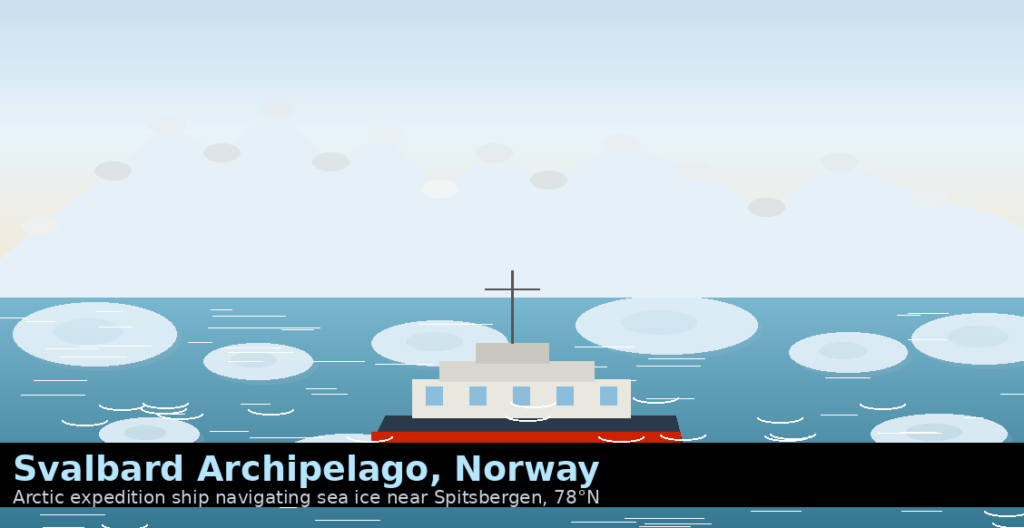
Svalbard sits at around 78 degrees north, making it one of the most accessible points of the High Arctic for international travelers. In 2026, it is a critical hub for climate science tourism, with guided expeditions focused on glacier retreat, permafrost dynamics, and polar wildlife including polar bears, walruses, and Arctic foxes. The University Centre in Svalbard (UNIS) runs public lecture programs and has partnered with several expedition operators to provide scientific context for visitors. The rapidly visible effects of Arctic warming make Svalbard a powerful destination for anyone wanting to understand climate change through direct observation rather than data alone.
9. Jordan and the Dead Sea Region
Jordan offers a rare combination of geological, archaeological, and ecological science in one compact destination. The Dead Sea is one of Earth’s most extreme natural environments, a hypersaline lake sitting at the lowest point on land that supports a unique microbial science program. The ancient Nabataean engineering at Petra demonstrates water management systems that continue to inform modern hydrology. Citizen science water-testing programs have recently been introduced on trekking routes in Jordan, allowing hikers to contribute freshwater biodiversity samples to international research databases during hikes through Wadi Rum and the Dana Biosphere Reserve.
10. Hawaii, USA
Hawaii’s position as a meeting point of volcanism, marine science, and astronomy makes it one of the most scientifically dense destinations in the world. Kilauea, one of the most continuously active volcanoes on Earth, is monitored around the clock by the USGS Hawaiian Volcano Observatory, and visitor programs allow travelers to understand eruption science in real time. The summit of Mauna Kea hosts some of the world’s most important telescopes, and stargazing tours at altitude offer views matched by almost nowhere else. For marine science, the warm, clear waters around the Big Island support advanced citizen science snorkeling programs focused on coral reef health monitoring.
Summary: Best Science Tourism Destinations 2026
| Destination | Best For | Science Focus | Accessibility |
|---|---|---|---|
| Galapagos, Ecuador | Biology + Evolution | Wildlife ecology | Moderate |
| Iceland | Geology + Space | Volcanology, auroras | Easy |
| New Zealand | Astronomy + Conservation | Dark skies, wildlife | Easy |
| Slovenia | Geology + Caves | Karst systems | Easy |
| Singapore | Urban STEM | Technology, sustainability | Very easy |
| Antarctica | Climate + Marine | Citizen science expeditions | Challenging |
| Costa Rica | Biodiversity | Rainforest ecology | Easy |
| Svalbard, Norway | Climate Science | Arctic research | Moderate |
| Jordan | Geology + Hydrology | Water science, archaeology | Moderate |
| Hawaii, USA | Volcanism + Astronomy | Active geology, telescopes | Easy |
Our recommendation
If you can only choose one, the Galapagos Islands remain the gold standard for science tourism in 2026. No other destination puts you this close to living evolutionary research in an ecosystem that remains largely intact. Iceland is the best runner-up for European-based travelers, and Singapore is the pick for anyone focused on STEM education and technology. Wherever you go, look for programs that involve you in genuine data collection rather than passive observation. That is what separates science tourism from regular nature travel, and the experiences are far more memorable for it.
Frequently asked questions
What is science tourism and how is it different from regular nature travel?
Science tourism involves travel experiences that are structured around scientific learning, research participation, or engagement with scientific phenomena. Unlike general nature travel, science tourism typically includes expert-led programs, hands-on data collection, or visits to active research sites. The difference is intentionality: science tourists come home with knowledge and, often, a contribution to real research.
Which science tourism destination is best for beginners?
Costa Rica and New Zealand are the most accessible starting points for first-time science travelers. Both countries have well-developed English-language tour infrastructure, affordable guided programs, and genuinely significant scientific environments. Costa Rica is particularly strong for biology and ecology, while New Zealand offers dark sky astronomy alongside conservation-led wildlife experiences.
Is science tourism expensive in 2026?
Costs vary widely. Destinations like Slovenia, Jordan, and Costa Rica offer excellent science tourism experiences on a moderate budget. Antarctica and the Galapagos are at the premium end due to strict visitor controls and specialist guide requirements. Singapore is a mid-range option with exceptional value for urban STEM travel. Most citizen science programs include the research component at little or no additional cost above standard tour fees.
Can students and school groups participate in science tourism programs?
Yes, and 2026 has seen a significant expansion of science tourism programs designed specifically for students. Singapore, Iceland, New Zealand, and Costa Rica all have well-structured school and university group programs. Several operators, including those profiled by the University Centre in Svalbard, now offer academic credit pathways for students who participate in field research programs.
What is citizen science travel and how do I get involved?
Citizen science travel means joining a trip where you actively contribute data to real research projects rather than just observing. Travelers have collected freshwater biodiversity samples in the Dolomites, tracked whale populations in Antarctica, and monitored coral health in Hawaii. Organizations like Responsible Travel maintain an up-to-date directory of citizen science holiday programs worldwide, which is the best starting point for finding a trip that matches your interests.
Author: Written by the Lexica Routes editorial team, covering travel, education, and study abroad since 2025.