Teaching Abroad in Asia vs Europe: Salaries, Lifestyle and How to Choose
You have your TEFL certificate, you have the itch to go, and now you are staring at two very different worlds on the map. Asia promises structured programmes, bigger savings, and a total culture reset. Europe offers café culture, short workdays, and the chance to weekend-hop between countries by train. Both are genuinely great options in 2026. The question is which one fits what you actually want from the next chapter of your life. This comparison breaks down salaries, benefits, lifestyle, and entry requirements so you can make a confident call.
Salary Snapshot: What You Actually Take Home
Salary numbers for teaching abroad can be misleading if you look at them in isolation. What matters is what you keep after rent, food, and daily life.
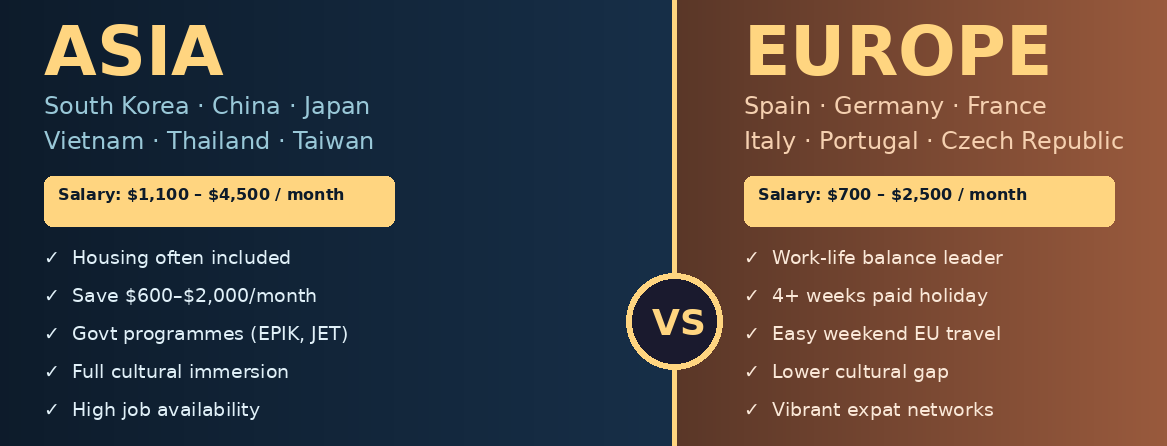
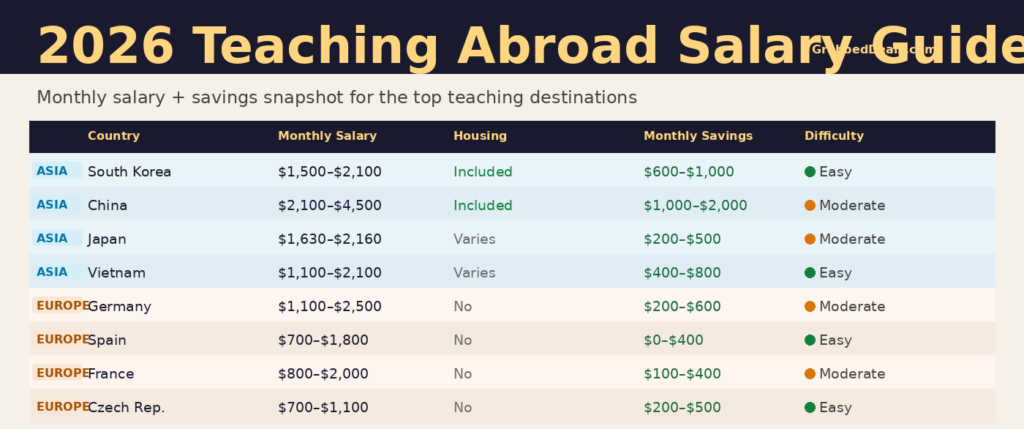
Asia runs the full spectrum. South Korea consistently ranks as a top pick, with the government-run EPIK programme offering monthly pay of around $1,500 to $2,100 USD, provided housing, and realistic savings of $600 to $1,000 per month. China sits at the higher end for raw earnings: monthly pay in China typically runs from $2,100 to $4,500 USD, depending on city tier and school type, and since many schools provide free housing or a significant rental allowance, most teachers comfortably save between $1,000 and $2,000 every month. Southeast Asia pays less on paper, but the cost of living is dramatically lower. Vietnam and Thailand salaries for TEFL teachers sit around $1,000 to $2,300 per month, but these figures are offset enough by the low cost of living that teachers can live comfortably in the region.
Europe tells a different story. In Spain, the most popular European destination, language school salaries run from about €1,200 to €1,800 per month, while international school positions can reach €2,000 and above. Germany offers the highest TEFL salaries in Europe, though the cost of living is correspondingly higher. The honest takeaway from Europe is that you are not usually there to get rich. Spain is widely described as a “break-even” destination for most teachers, but the quality of life is considered unmatched.
Benefits and Perks: Beyond the Monthly Paycheck
This is where Asia pulls well ahead if savings are your goal. East Asia, specifically China and South Korea, ranks among the highest-paying regions globally for TEFL teachers, with salaries of roughly £1,200 to £2,160 per month plus substantial benefits. Those benefits routinely include free furnished housing, round-trip flight reimbursement at the end of your contract, health insurance, and a completion bonus. For a first-year teacher, these add-ons can be worth an additional $5,000 to $8,000 annually on top of your salary.
Europe is more variable. Public school teachers in European countries earn 10 to 20 percent more than their private school counterparts due to government pay scales, while international private schools in Asia pay 40 to 100 percent premiums compared to public school positions. That said, across the European Union, workers typically receive at least four weeks of paid annual leave, and many European teaching positions offer fewer teaching hours and generous holiday periods. Spain’s TAPIF language assistant programme and the AUXILIARES scheme both include health coverage, and France’s TAPIF programme requires only 12 hours of teaching per week.
If your priority is maximum financial gain in the shortest time, Asia wins this round outright.
Lifestyle and Day-to-Day Experience
Money is only part of the equation. What your daily life looks and feels like matters just as much, especially if you are committing to one or two years abroad.
Teaching in Asia often means a more structured, intensive environment. South Korea and Japan run highly organised national programmes with clear contracts, reliable pay, and well-defined expectations. The cultural adjustment is real: communication styles, food, social norms, and urban density are all significantly different from what most Western teachers are used to. That said, teachers in Japan consistently rate Japan’s overall experience quality as outstanding, with the blend of ultramodern technology and ancient traditions, stunning natural landscapes, and renowned cuisine creating genuinely memorable living experiences. Southeast Asia, by contrast, is much more relaxed in pacing and tends to attract teachers who want adventure, affordability, and flexibility alongside their work.
Teaching in Europe is a lifestyle choice as much as a career move. Spain and France are regularly named among the top destinations for work-life balance, both offering shorter teaching hours and lifestyles that prioritise culture, social life, and personal wellbeing. Weekend travel between European countries by budget airline or rail is easy, cheap, and one of the biggest draws of the continent. The cultural gap is smaller for most English-speaking teachers, which makes settling in faster and easier.
The honest lifestyle verdict: Asia offers more intensity, more savings, and a deeper cultural immersion. Europe offers more ease, more freedom from work pressure, and a gentler landing for first-time teachers abroad.
Entry Requirements: Visas and Qualifications
Both regions require a TEFL or CELTA certificate and a bachelor’s degree for most reputable positions. The differences come in the specifics.
Asia has structured national programmes that handle most of the visa paperwork on your behalf. South Korea’s EPIK programme places thousands of native English speakers in public schools annually and provides housing, while Vietnam has emerged as Southeast Asia’s fastest-growing TEFL market with demand surging across public schools, private language centres, and international institutions. China requires a Z Visa obtained before arrival, and your school will typically guide you through converting it into a Work Permit and Residence Permit once you land.
Europe varies by citizenship. EU passport holders have near-unrestricted access to work anywhere on the continent. Non-EU teachers typically apply through specific programmes: Spain’s Auxiliares scheme, France’s TAPIF, or private school direct hire. Western European countries offer higher salaries but come with higher taxation and living costs, while Eastern and Central European countries like Hungary, Poland, and the Czech Republic provide lower salaries but a more comfortable living on a teacher’s income.
Asia vs Europe: Side-by-Side Comparison
| Category | Asia | Europe |
|---|---|---|
| Monthly salary range | $1,100 to $4,500 USD | $700 to $2,500 USD (€) |
| Savings potential | High to very high | Low to moderate |
| Housing included | Frequently (SK, China, Japan) | Rarely |
| Working hours | Moderate to high | Low to moderate |
| Lifestyle pace | Intense, immersive | Relaxed, exploratory |
| Entry ease | Structured national programmes | Varies by citizenship |
| Best for savers | China, South Korea | Eastern Europe |
| Best for lifestyle | Japan, Vietnam | Spain, Portugal |
Our Take
If your main goal in 2026 is to pay off student loans, build savings, or accelerate your financial position, Asia is the right call. South Korea and China, in particular, offer a combination of salary, free housing, and perks that is simply not matched anywhere in Europe for TEFL teachers. If your goal is to ease into life abroad, travel on weekends, and enjoy a slower, culturally rich routine without a dramatic lifestyle adjustment, Europe delivers something Asia cannot.
The good news is that this does not have to be a permanent choice. Many teachers spend two years in South Korea building savings, then move to Spain for the lifestyle. Both regions are hiring actively in 2026, and the global demand for qualified teachers in 2026 is higher than ever. Start with your priority, not someone else’s.
Frequently Asked Questions
Is teaching abroad in Asia or Europe better for saving money in 2026?
Asia is significantly better for savings in 2026. South Korea and China both offer free or subsidised housing on top of competitive salaries, meaning teachers can realistically save $600 to $2,000 per month. In Europe, most teachers in Spain and France roughly break even or save a modest amount, making Asia the stronger choice if financial goals are the priority.
Do I need a teaching degree to teach abroad in Asia or Europe?
A full teaching degree is not required for most ESL positions in either region. A bachelor’s degree in any subject combined with a 120-hour TEFL or CELTA certificate is the standard entry point for language school and government programme roles across Asia and Europe alike. International school positions at higher salary bands do typically require a teaching licence from your home country.
Which European country pays the most for teaching in 2026?
Germany consistently offers the highest TEFL salaries in Europe, with monthly earnings at language schools and corporate English roles reaching up to €2,500 and international school positions going higher. Luxembourg tops European teacher salary tables overall for qualified educators, though TEFL-specific positions there are limited. Germany is the most practical high-earning option for TEFL teachers in Europe.
Is it hard to get a work visa to teach in South Korea or Vietnam in 2026?
South Korea is one of the more straightforward visa processes for teaching abroad. The EPIK government programme sponsors your visa and handles most of the paperwork, requiring a bachelor’s degree, a TEFL certificate, and a clean background check. Vietnam has a streamlined process for private school hires, and demand is high enough that most qualified applicants secure positions without long waits. Both are considered accessible destinations for first-time teachers.
Can I switch from teaching in Asia to Europe, or vice versa?
Yes, and it is a common career path. Many teachers complete one or two years in Asia, build savings, then relocate to Europe for the lifestyle shift. The main consideration when moving to Europe is timing: most European schools hire on a September start cycle, meaning applications typically open between January and May. Moving from Europe to Asia offers more hiring windows throughout the year, which gives more flexibility.